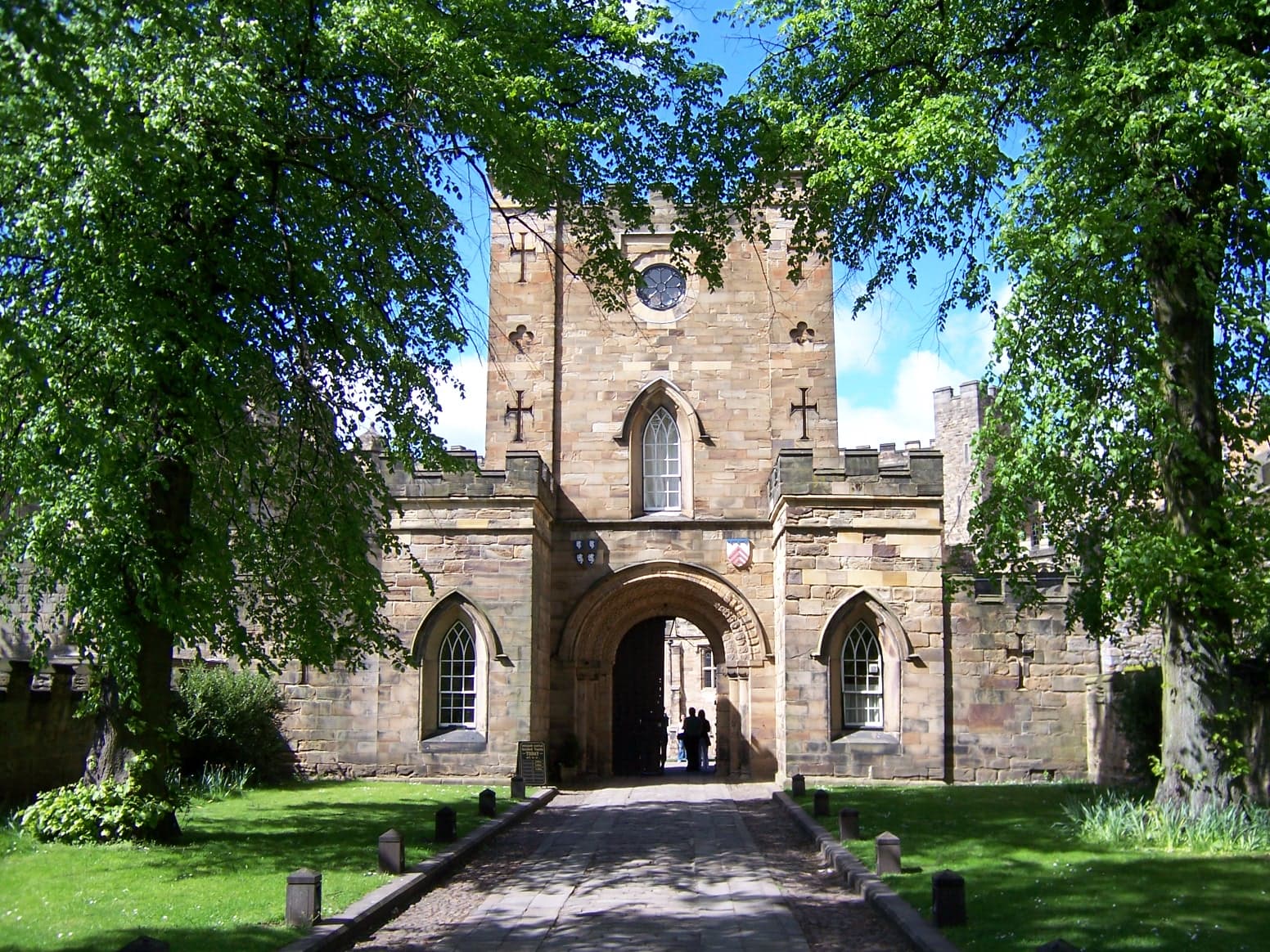
Many residents of Durham, and many students of its university, like to claim that Durham is the third oldest such institution in England, after Oxford and Cambridge. However, a lot of people might be surprised to hear that this claim is not universally accepted. There are three rivals to Durham’s third place status: the University of London, University College London (UCL) and King’s College London. And, to make matters more confusing, UCL and King’s are colleges of the University of London rather than universities in their own right. But let’s try to unravel all these claims and come to some conclusions.
It all depends on how university status is defined. One idea is that an institution becomes a university when it is granted the right by the government to use the title of ‘university’. According to this notion, Durham is England’s third oldest university as it was named as a university in the Durham University Act of 1832 whereas the University of London did not get the right to use this title until 1836. Indeed, the European University Association’s publication, A History of the University in Europe, names Durham as England’s third oldest university, London as the fourth oldest, and UCL and King’s as only colleges of London.
A different idea, however, is that institutions become universities when they are granted royal charters. (A royal charter is a document issued by a monarch granting a person or institution certain rights or a certain status.) According to this definition, King’s College is the third oldest university as it received its charter in 1829. But such a claim is not without its weaknesses as King’s was just a college of the University of London at this time. If this disqualifies King’s, it means that the University of London as a whole is the third oldest as it received its charter in 1836, one year before Durham did. But such a claim also has its shortcomings as many well-known and ancient universities, including Oxford and Cambridge, were not founded by royal charters.
Some people prefer to rely on dictionary definitions. The Oxford English Dictionary states a university is “a high-level education institution in which students study for degrees and academic research is done”. Collins Dictionary defines a university as “an institution of higher education having the authority to award bachelors’ degrees and higher degrees, usually having research facilities.” According to the first definition, King’s College and UCL would qualify as ‘universities’, despite being colleges of a larger university. But Durham would still be the oldest as students there studied for degrees from 1833 onwards. UCL and King’s would be joint fourth oldest as students could study for degrees in these institutions from 1838. These degrees were, however, awarded by the University of London. The Collins definition also favours Durham as London, despite having degree-awarding powers, was classified as an examining body rather than an ‘institution’. Older dictionaries, though, give looser definitions. Johnson’s Dictionary claims a university is a place where ‘all the arts and faculties are taught and studied’. Such a definition might favour King’s, which was established in 1829, three years before Durham. Though UCL was established earlier, in 1826, people often refused to accept its university status as it did not teach ‘all the arts’ as theology was not studied there. Although Durham’s claim is strengthened by the definitions demanding universities have degree awarding powers, it is debatable when these powers need to have begun. UCL and King’s have been able to award their own degrees since 2005 and 2006 respectively. We could ask whether it is more important that institutions can award degrees now or if they could at the time of their foundation.
Despite all the above arguments, most people consider Durham to be England’s third oldest university, but I wouldn’t be surprised if challenges to this status keep being made from our capital for some time to come.
David Sunderland.