The RSPCA is calling on cat owners in County Durham to neuter their pets this World Spay Day, Tuesday 24 February, as record numbers of cats continue to fill its animal centres across England and Wales.
More than 1,400 cats were in national RSPCA care at the end of December 2025 – a 72% rise from the 832 cats that were with the charity four years ago (December 2021). There are currently 30 cats rescued from cruelty and neglect in care at RSPCA Felledge Animal Centre in Chester-Le-Street – with hundreds more in private boarding. Across the wider RSPCA network – made up of 133 separate registered charities – there are at least 2,300 cats currently in care.
Worryingly, the surge is happening outside the traditional “kitten season” in summer. December alone saw a 30% increase in cats in care compared to the previous year (December 2024), an unprecedented rise for this time of year.
The key message from the charity is a plea for cat owners to neuter their pets and to stop unwanted breeding, which exacerbates the problem amid an ongoing “capacity and welfare crisis”.
Alice Potter, cat welfare expert at the RSPCA, said:
“The rising numbers of cats and kittens coming into our care is heartbreaking – and especially worrying in the winter months. Many are dumped or are kittens born in unsafe situations as part of a feral group.
“But owners can really do their bit to help with the capacity and welfare crisis. Cat owners who neuter their cats help stem this surge in unwanted pets.
“There is a misconception that cats can only become pregnant when they are older or that it’s healthy for them to have at least one litter of kittens but this isn’t the case – and some cats can become pregnant as young as four months of age, so neutering from this age is crucial. Neutering male cats can stop them spraying to mark territory, and from getting injuries while fighting. Neutered cats are also less likely to wander off. Having them snipped can also stop cats from spreading the FIV Virus – which is spread through cat bites, often between male cats fighting over a mate.“Caring for an unexpected litter of kittens is often costly and stressful and in extreme cases sees some owners cruelly dumping kittens on the roadside, in bins, or cardboard boxes – leaving the RSPCA and others to pick up the pieces.
“Fortunately, help is available through many local RSPCA branches and other charities to help cover the cost of neutering. But this is something all cat owners need to take very seriously.”
And those whose pets are already neutered are being urged to do their bit by sharing the benefits of spaying with fellow cat owners.
Alice added:
“World Spay Day is a great opportunity for everyone to promote the benefits of getting cats spayed – and to highlight that kittens need to be spayed as young as four months old. Many people are surprised that it is possible for felines to get pregnant that young – but it can happen, meaning owners need to take action early.”
The RSPCA neutered 3,218 cats at national centres and animal hospitals last year. Thousands more were neutered by RSPCA branches.
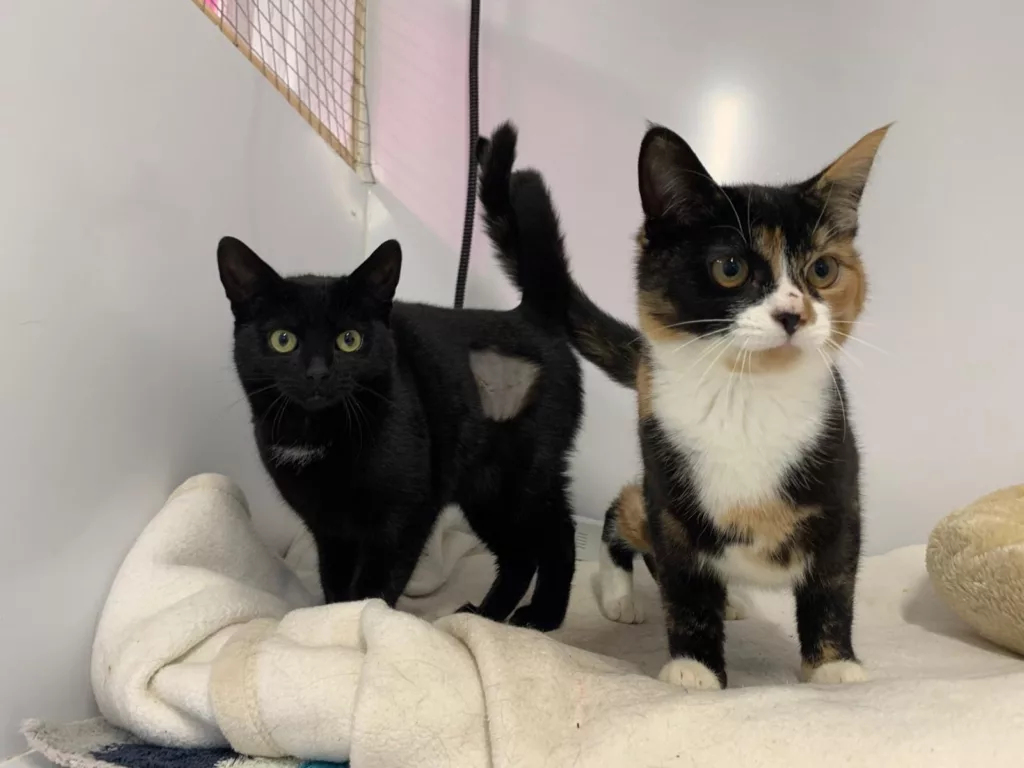
Earlier this month, two kittens (pictured, left) were discovered at the bottom of a rubbish chute in Shepherds Bush, London. It was a 22-floor drop and it is feared they were thrown down the chute. The kittens are now named Kathy and Karen, and were happily rehomed via RSPCA Hillingdon, Slough, Windsor, Kingston & District Branch.
Meanwhile, tiny kittens Olivia, Nancy and Little Dorrit (pictured right) were rescued from an empty property in Gravesend in freezing temperatures in January. Dozens of other cats had been left there to fend for themselves.
The trio were seriously unwell but, after specialist care at RSPCA Canterbury & District Branch, they have now found new homes.
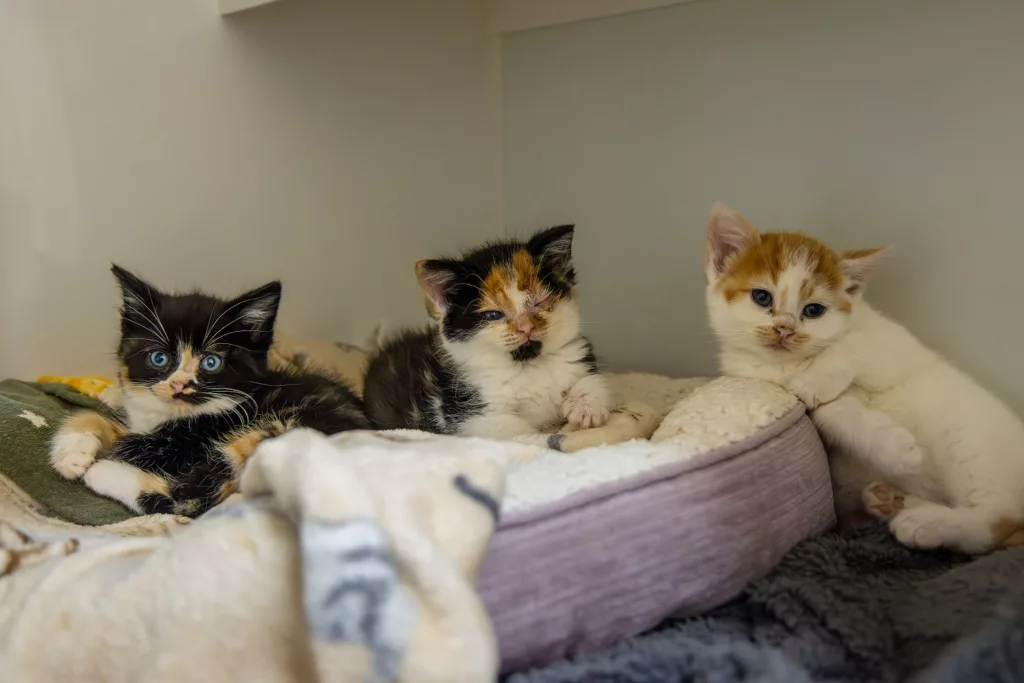
Two eight week old kittens were also discovered in a bin in Peckham, London, where it is believed they were abandoned by their mum. There are several feral cat colonies in the area. They were named Joe and Nick and have since been rehomed by RSPCA Brighton and the heart of Sussex Branch.
More than 50 feral cats have been neutered by RSPCA Cheshire (Altrincham) Branch, in a trap, neuter and release (TNR) operation. This means they can continue living the lifestyle they are used to, but will no longer be adding to the cat population.
These are just a small snapshot of issues the charity deals with relating to a growing cat population. According to the charity Cats Protection, there are 11 million owned cats in the UK – of those a whopping 12% are not neutered – that’s around 1.3million cats. Top reasons given for not neutering include that the cat does not go outside, the owner wants to have kittens, and the owner thinks the cat is too young.
For more information on neutering please visit: https://www.rspca.org.uk/adviceandwelfare/pets/general/neutering
To adopt a rescue cat, please visit RSPCA Find A Pet