
Life in Durham moves at its own pace. A quick trip to the shops, the school run, a short drive into the city centre—most journeys are familiar, routine and often feel too minor to make a difference.
But it’s exactly these everyday habits behind the wheel that can quietly add up, affecting both your car’s performance and your long-term costs. In Durham, drivers clocked 2.8 billion vehicle miles in 2024, much of it urban stop-start traffic.
Many drivers don’t notice the impact because nothing goes wrong overnight. Instead, wear and tear builds gradually—shaped not by big mistakes, but by small, repeated behaviours.

Stop-Start Driving Adds Up
Urban traffic is part of daily life in Durham. Frequent stops at traffic lights, short distances and congested roads mean drivers are constantly switching between accelerating and braking.
In these conditions, one of the most stressed components is the clutch. Repeated gear changes and slow-moving traffic increase wear, especially when journeys are short and the car doesn’t fully reach a stable operating temperature.
The Habit of “Resting” on the Clutch
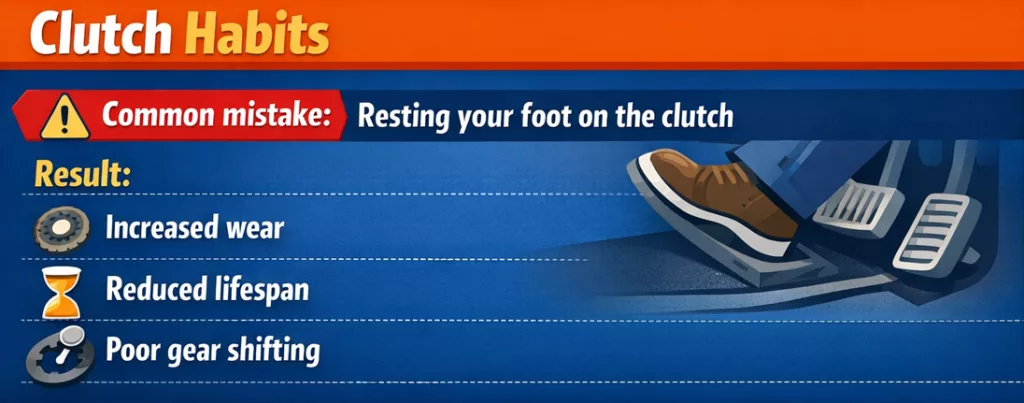
This is one of the most common — and often unnoticed — driving habits. Many drivers keep their foot on the clutch pedal even when it isn’t necessary, such as in traffic or at a red light.
Even slight pressure creates additional strain on the mechanism. Over time, this can lead to faster wear of components, eventually affecting gear shifting and overall driving comfort.
Short Trips Aren’t Always Gentle on Your Car
Short trips around the city may seem harmless—the engine isn’t pushed hard, and speeds are low. However, this type of driving can be more demanding than it appears. Nationally, 67% of UK drivers travel under 100 miles weekly, dominated by short urban journeys.
The engine doesn’t always reach its optimal operating temperature, and frequent stopping and starting increases stress on key systems. In combination with urban traffic, this once again contributes to increased clutch wear.
Ignoring Small Warning Signs
Light vibrations, slight delays when changing gears, or an unusual feel in the pedal are often ignored. In the rush of daily life, these small details don’t seem important.
However, these can be early signs that the clutch is beginning to wear. The sooner a driver notices these changes, the easier and more cost-effective it is to address them.
Driving Style Matters More Than You Think
Smoothness is key to vehicle longevity. Harsh starts, frequent acceleration and braking in city traffic place additional strain on many components.
A calmer driving style not only makes the journey more comfortable but also helps reduce wear—especially in conditions typical for Durham roads. DVSA’s 2025 roadworthiness guide stresses proactive checks for such wear in urban fleets.
A Small Change Can Make a Big Difference
According to Buycarparts UK, aggressive driving style, exposure of components to dirt, moisture and chemically active substances, installation of low-quality parts, the habit of keeping the clutch pressed, and ignoring operating conditions and manufacturer recommendations are among the main causes of clutch failure.
The good news is that most of these habits can be changed. Paying a little more attention to how you drive can significantly extend the life of key components and reduce maintenance costs—potentially saving hundreds on repairs.
In a city where every journey is part of daily life, small adjustments like these can make driving more reliable, comfortable and cost-effective in the long run.
Sources: DfT/DVSA vehicle data via GOV.UK, Buycarparts UK, RAC/AA surveys and warranty analyses (2024-2025)